The basis of cut protection
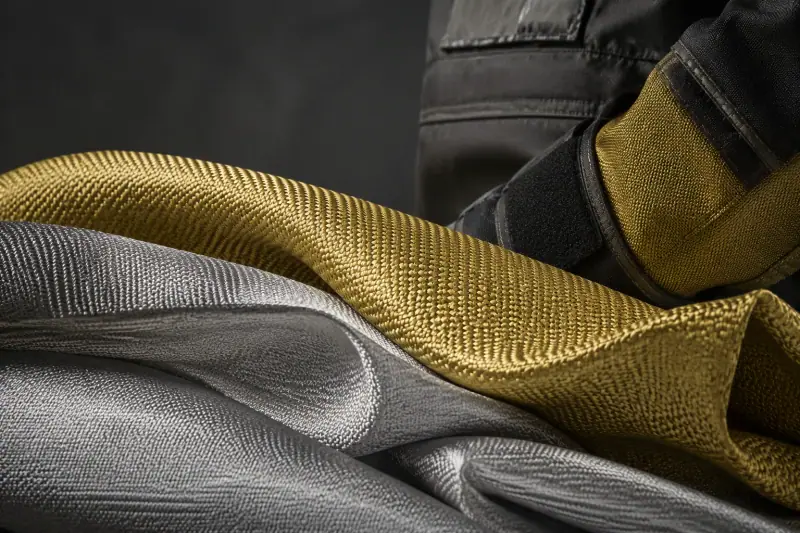
Filament yarn and spun yarn are used in knits, fabrics and covered yarn for lightweight products with high specific strength and a cool touch.
Cut resistance without unnecessary weight
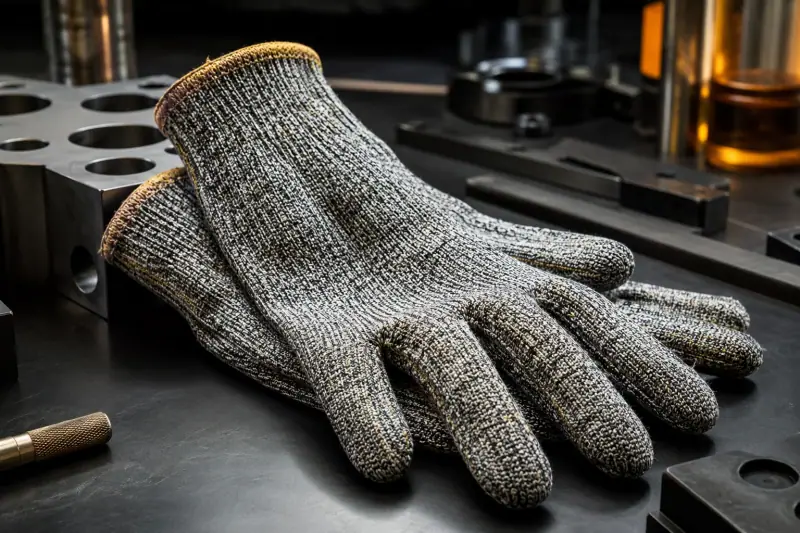
UHMWPE enables lightweight cut-resistant gloves and sleeves, while para-aramid adds heat resistance for work near hot surfaces and flames.
01 — ROLE IN THE PRODUCT
The material is selected by its function in the structure. The same product may require different fibres depending on the environment and load.
Filament yarn and spun yarn are used in knits, fabrics and covered yarn for lightweight products with high specific strength and a cool touch.
Staple and filament yarn are used where mechanical protection must be combined with heat resistance, flame resistance and stability near heat sources.
02 — APPLICATIONS
Knitting yarn and blended constructions for cut and puncture protection.
Reinforcement of the forearm while retaining flexibility and low weight.
A high-strength core and an outer covering for comfort, colour and processability.
Para-aramid for welding, hot production and handling heated parts.
03 — VISUAL GUIDE
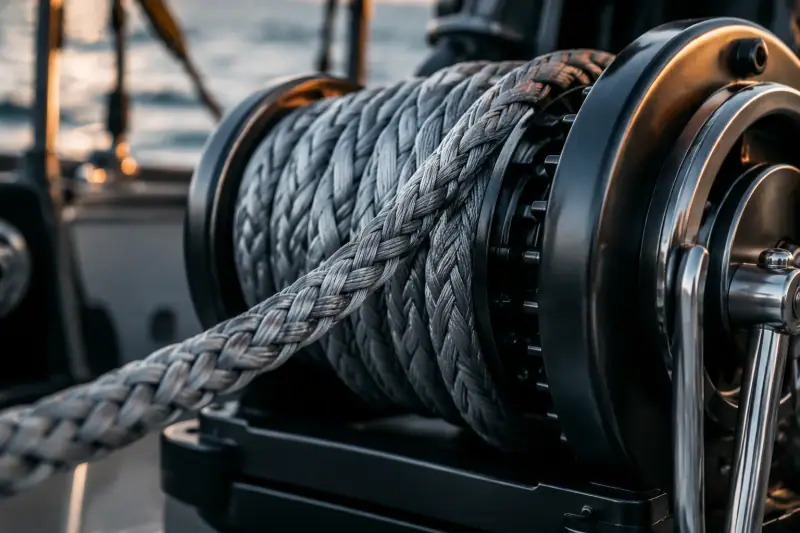
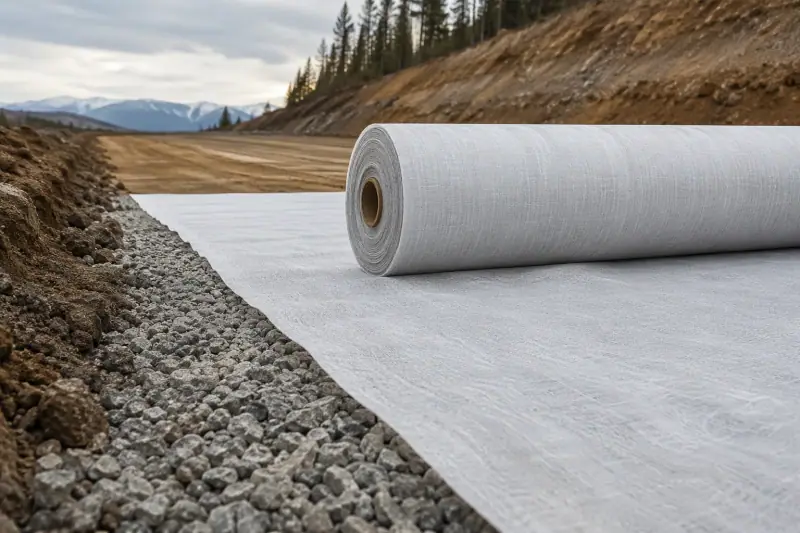
The illustrations show where the high-performance material sits and what it does. These are application diagrams, not photographs of serial products.
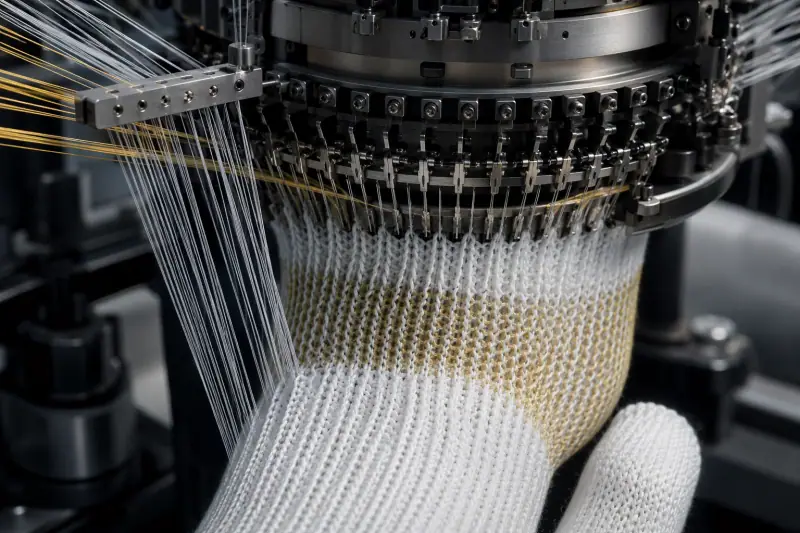 Diagram 01
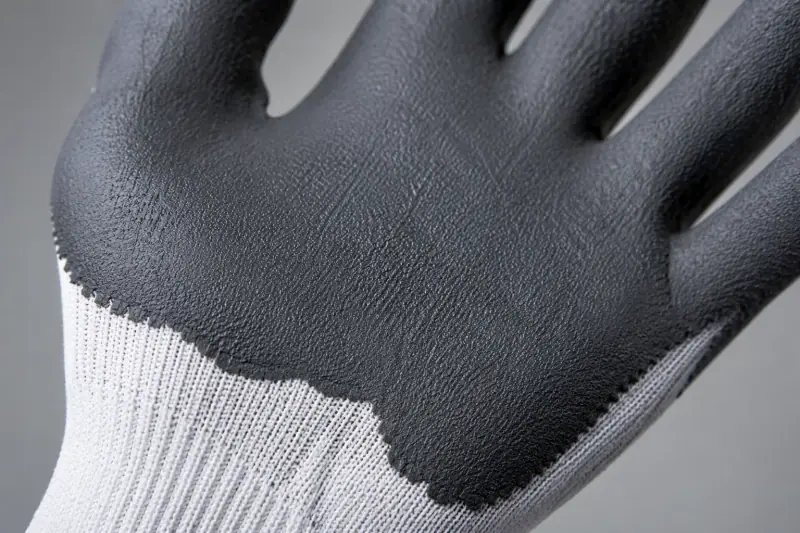 Diagram 02
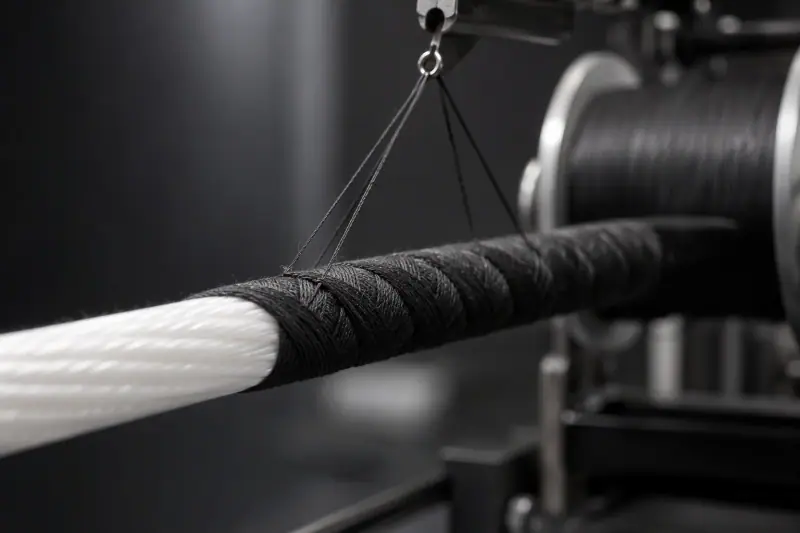 Diagram 03
04 — CATALOGUE GUIDE
A starting point for a technical inquiry, not a ready-made pilot specification.
05 — SELECTION AND PILOT
The more precise the inputs, the fewer unnecessary samples and the faster the comparison with the incumbent material.
Record the answer in the technical specification together with the control material, pilot volume, test method and acceptance criteria.
Record the answer in the technical specification together with the control material, pilot volume, test method and acceptance criteria.
Record the answer in the technical specification together with the control material, pilot volume, test method and acceptance criteria.
Record the answer in the technical specification together with the control material, pilot volume, test method and acceptance criteria.
Next step
Open the inquiry form and specify the product, requirements and approximate pilot volume. Lab-test samples are free.