Cord, carcass and dispersed reinforcement
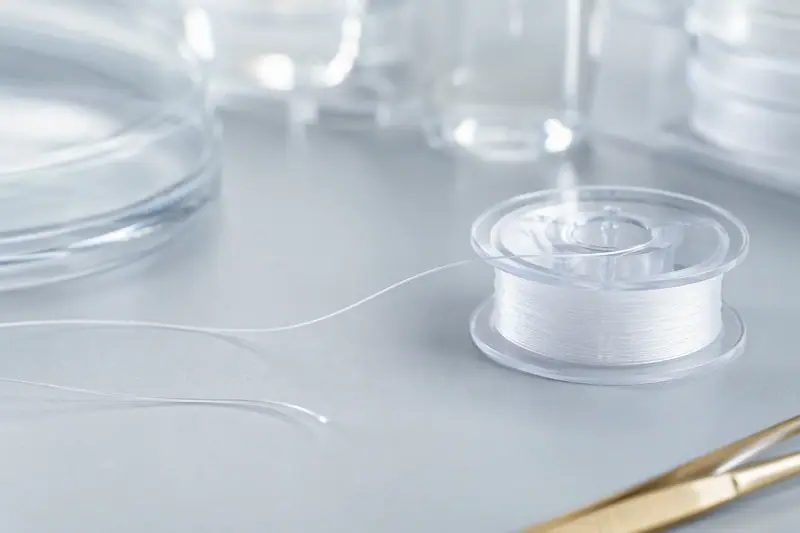
Filament yarn carries loads in flexible products; staple, super-short fibre and pulp reinforce and tune the properties of compounds.
Reinforcement for rubber and friction materials
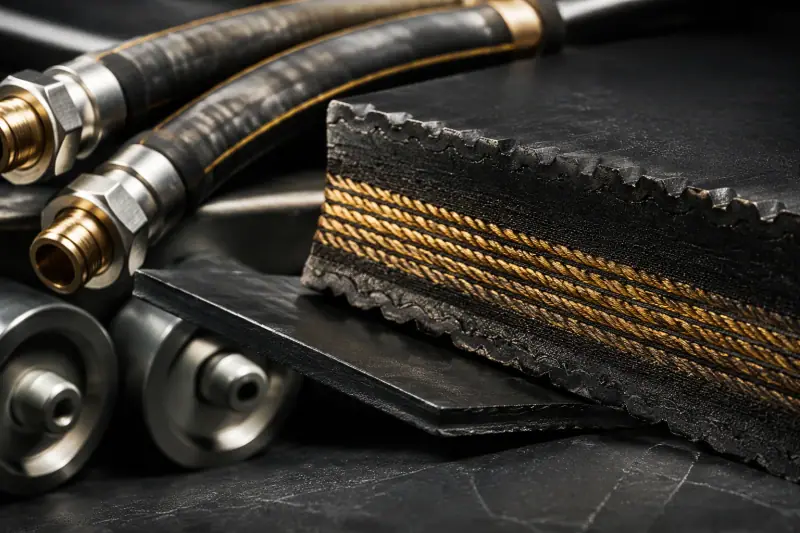
Para-aramid is used as cord and a load-bearing carcass in belts, hoses and tires; pulp and short fibre are used in friction, sealing and reinforced rubber compounds.
01 — ROLE IN THE PRODUCT
The material is selected by its function in the structure. The same product may require different fibres depending on the environment and load.
Filament yarn carries loads in flexible products; staple, super-short fibre and pulp reinforce and tune the properties of compounds.
02 — APPLICATIONS
Aramid carcass for lower weight and tensile-load handling.
Load-bearing reinforcement considering impulse loads, bending and rubber adhesion.
Cord and strength members for tires, drive belts and variator belts.
Pulp and fibre in brake linings, clutches, packings, gaskets and seals.
03 — VISUAL GUIDE
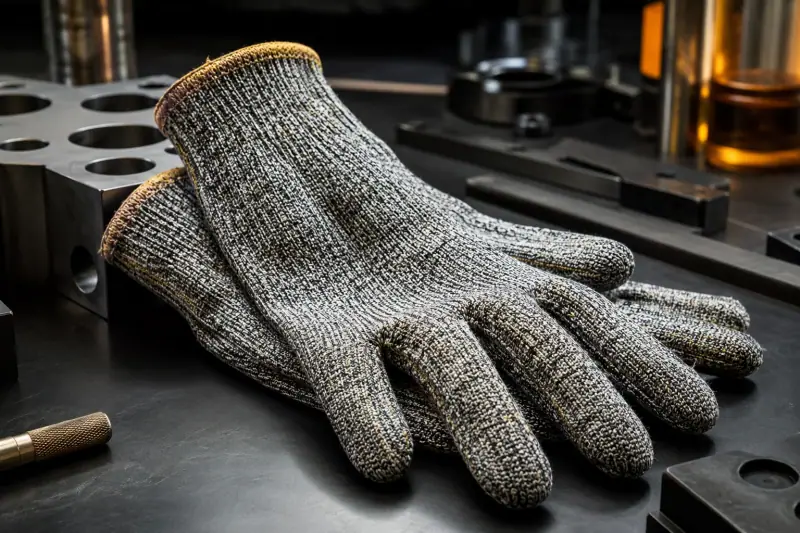
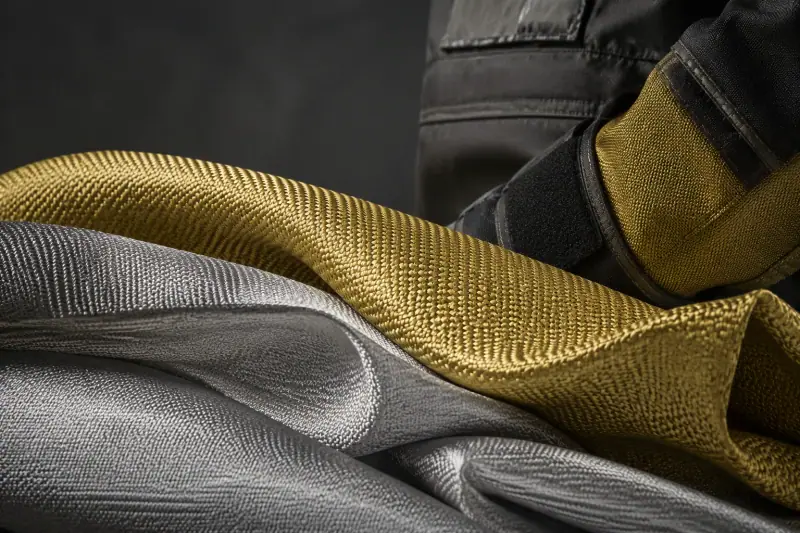
The illustrations show where the high-performance material sits and what it does. These are application diagrams, not photographs of serial products.
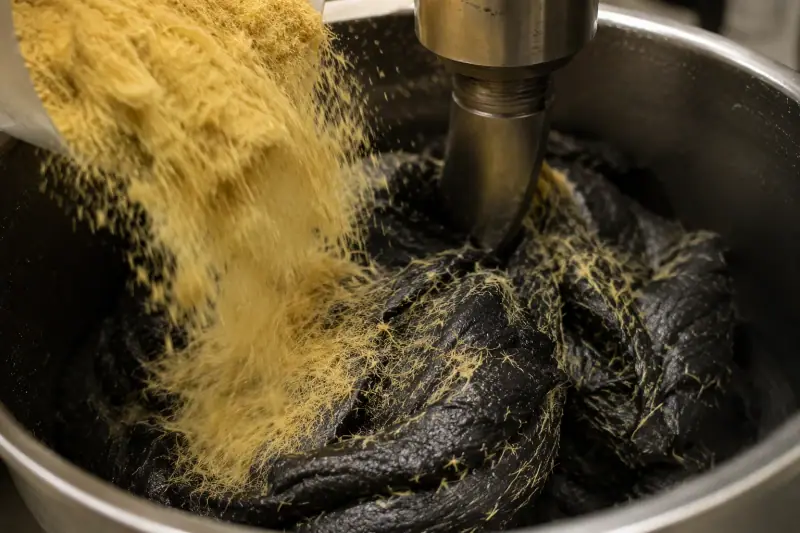 Diagram 01
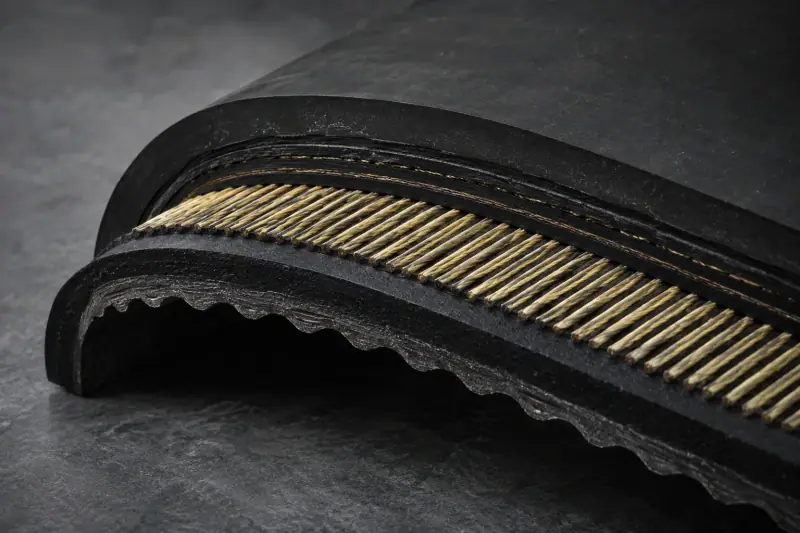 Diagram 02
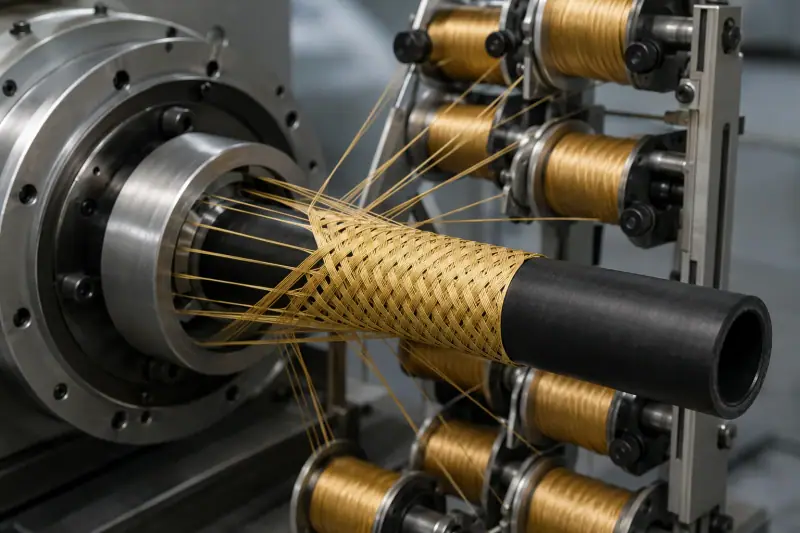 Diagram 03
04 — CATALOGUE GUIDE
A starting point for a technical inquiry, not a ready-made pilot specification.
05 — SELECTION AND PILOT
The more precise the inputs, the fewer unnecessary samples and the faster the comparison with the incumbent material.
Record the answer in the technical specification together with the control material, pilot volume, test method and acceptance criteria.
Record the answer in the technical specification together with the control material, pilot volume, test method and acceptance criteria.
Record the answer in the technical specification together with the control material, pilot volume, test method and acceptance criteria.
Record the answer in the technical specification together with the control material, pilot volume, test method and acceptance criteria.
Next step
Open the inquiry form and specify the product, requirements and approximate pilot volume. Lab-test samples are free.